Getting to know Prof. Rubiyanto Kapid, 51探花 Professor in the Field of Micropaleontology
By Adi Permana
Editor Adi Permana
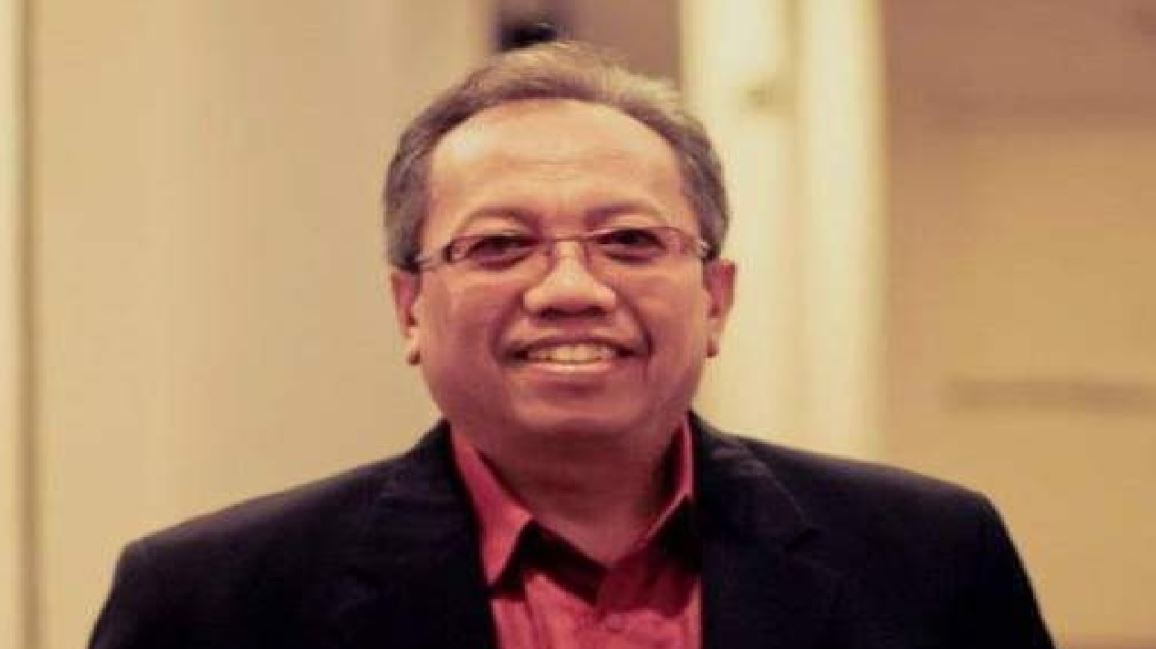
BANDUNG, itb.ac.id 鈥� His interest in micropaleontology since he was a student made Prof. Rubiyanto Kapid has studied and explored research topics in this field. Not many researchers are interested in this scientific field. That is why this science is often referred to as 'Ningrat Science', making you dizzy and dying. But despite all the difficulties, a lot of wisdom is obtained. We come to know how tiny creatures that are micron-sized can live and reproduce perfectly. Because not many people take scientific concentrations in the field of micropaleontology, then Prof. Ruby, as he is called, is currently the only Professor in the field of micropaleontology from the Institut Teknologi Bandung.
Prof. Dr. Ir. Rubiyanto Kapid, DEA., is a Professor from the Faculty of Earth Sciences and Technology (F51探花). He is part of the Paleontology and Quaternary Geology Expertise Group. He earned a bachelor's degree in geology at 51探花 in 1982. Then he earned a DEA degree at Universite Claude Bernard, Lyon I, France in 1988. He earned a doctorate at Universite De Reims Champagne Ardenne, France at the end of 1991.
When talking with the Public of Relation 51探花 via telephone, Prof. Rubiyanto shared the story of his career as a lecturer and researcher in the field of micropaleontology. He is a student and an admirer of his teacher, Prof. Harsono Pringgoprawiro (Prof. emeritus from 51探花).
Prof. Rubiyanto started his career journey by becoming a lecturer assistant when he was a Geological Engineering student at 51探花 around the 1980s. When he graduated, he was accepted as teaching staff in Geological Engineering and then assigned to study nanoplankton microorganisms by Prof. Harsono Pringgoprawiro who became his superior.
鈥淢icropaleontology itself is a science in Geological Engineering that studies micro-sized fossils in sedimentary rocks,鈥� he said.Because they are so micro, these organisms can only be seen using special microscopes such as a binocular microscope, polarization microscope, and even a scanning electron microscope (SEM), which magnifications can reach 50,000 times or more.
When he was assigned to study, he and ten other students from Bandung left for France. Previously, of course, Prof. Rubiyanto must first learn French in Indonesia. During the study assignment, he was the same age as Prof. Kadarsah Suryadi, DEA (51探花 Chancellor 2015-2020), Prof. Deny Djuanda Puradimaja, DEA (F51探花), Prof. Barti Setyani (FTSL), Prof. Abraham Suryahadikusuma (Unpad), etc.鈥淎rriving in Paris, the small team from Bandung was divided according to the choice of each university. Before college, I took a semester to study advanced French in the city of Lyon, the second-largest city in France. After studying the language, I enrolled at Claude Bernard University, Lyon I in the Sedimentology and Paleontology Department,鈥� he recalled.
After completing the DEA program (Diplome d'Etudes Approfondies, Masters level) in Lyon, he had to move universities following her supervisor (Prof. Mitchel ROUX) to the city of Reims, an old city in the northeast of Paris. The town of Reims is surrounded by cool and beautiful wineries. 鈥淔or me, the experience was very exciting. The move from Lyon to Reims during a tense winter, using a train with one child who is still a toddler and a wife who is pregnant the second child. As a BGF (de Boursier du Gouvernement Franqais) student, I get supported by complete facilities such as an apartment and other facilities, "he said.
At that time Prof. Rubiyanto received a full scholarship from the French government. The scholarships that were obtained, are very sufficient to live properly with his small family in France. Moreover, the city of Reims is a small city which is relatively cheaper than Lyon or Paris which are all expensive.
After taking his doctoral education there, Prof. Rubiyanto also earned a doctorate from the Department des Sciences de la Terre, L'Universite de Reims Champagne-Ardenne, where he studied micropaleontology, especially on foraminifera and nanoplankton. The title of the complete dissertation is: 鈥淟e Mio-Pliocene marin du Nord-Est de Java, Indonesie. Biostratigraphy qualitative et quantitative des foraminiferes et du nanoplancton鈥�. This dissertation discusses the microfossil content of foraminifera and nanoplankton found in marine sediments of Miocene to Pliocene ages in the North East Java Basin.
Joy and sorrow was a friend during the time of becoming a Micropaleontology Researcher. While pursuing the field of micropaleontology, especially nanoplankton, he had difficulties regarding the required special tools in conducting his research. Meanwhile in Indonesia, when he had just finished studying for his doctoral degree, he still did not have the tools. Therefore, he slightly modified the existing microscope device so that he could carry out further research.
Then, after five years of graduating from S3, Prof. Rubiyanto returned to France to continue his Post-Doctorate program at the Universite de Reims for two months in order to deepen research in the field of nanoplankton microorganisms. 鈥淲hen I returned from post-doctorate, finally there was a microscope at 51探花,鈥� he said. Nanoplankton itself is a very small microorganism measuring 2-10 microns which comes from marine algae or coccolithophore.
While working as a lecturer and researcher in the field of microorganisms, Prof. Rubiyanto has written many reference books in this field. Among these books are 鈥淔oraminifera: Biostratigraphy and Its Applications鈥� with Prof. Harsono. Furthermore, he wrote about 鈥淓asy Nannofosil鈥� and the book "Ostracoda" with his colleague from the Geological Agency, Kresna Tri Dewi. Other books that he wrote were related to the subjects he taught, namely the book 鈥淧ractical Work Guidelines鈥� in the Geological Engineering Study Program, as well as non-scientific books about his own autobiography for a limited circle.
鈥淢ost of the papers I write are about microfossils, starting in the Makassar Strait, Central Java, East Java, and East Indonesia with my students and colleagues,鈥� he said. Counted, he has also served at 51探花 for 36 years as a lecturer and researcher. Currently, he is the only professor in the field of micropaleontology after the two professors in the same field from 51探花 and UGM retired.
Rubiyanto said that his initial interest in micropaleontology was because he had been an assistant in the Micropaleontology Lab since he was a student. 鈥淏ecause you are familiar in this field, you look at the microscope every day, gradually you feel like you are interested and more interested in learning more deeply, plus the learning assignment from 51探花,鈥� he said.
Studying micropaleontology means studying one of the scientific groups in Geology. He explained that in Geology there are three major knowledge groups which are the knowledge of space, process, and time. For example, the science of space in geology discusses what rocks are and where they exist, whereas the science of processes discusses how they were formed, and the science of time discusses when they were formed. 鈥淪o there is space, process, and time to be studied in 51探花 Geology Study Program. And there is also a fourth field studied in geology, namely the use or application of geology itself, namely expertise group of Geology Application. The four scientific fields are reflected in the four expertise group in the 51探花 Geological Engineering Study Program.
So, the Geology Study Program has complete scientific fields, but it still needs to be developed further according to world technology developments. Frankly, we must also open our eyes to technological advances, especially in the development of environmentally friendly geoscience.
Due to the small number of people who study micropaleontology, he hopes that this science will not "become extinct" and there are those who continue to do so even though he is retired. Because if geology without knowledge of age (time), then, of course, it will be incomplete, he said.
In addition, even in this science, we can reconstruct the time of the discovery of ancient objects and fossils. 鈥淪o the knowledge is interesting because we can look to the past so that we can translate it into the future,鈥� he said.
Another uniqueness is that scientists in the field of micropaleontology can also know the climate in the past and see its predictions in the future by looking at the characteristics of its sediments, for example, there was a drought thousand of years ago, this will be reflected in the rocks and microfossils contained in it. Usually, the rocks in imperfect shapes and small amounts. 鈥淪o we learn from the past to interpret the future. We can do that in a simulation. Although science surely has its limitations, we still need to continue learning and make regeneration,鈥� concluded Prof. Rubiyanto.
Prof. Ruby currently lives in his modest house in Arcamanik, East Bandung with his wife Hj. Ampuh Puan Nandini. Her three children: Anjani Artie Billy, who was still a toddler, now lives in Bogor and gives her beautiful grandchildren, Bunga Syabnam Nabillamour and Bintang Claire Nabillamour. Meanwhile, the second child born in Reims, France, Bella Verita Newlander, lives in San Diego, California, USA. His youngest son, Camar Remoa, born in Reims in the last year of his doctoral studies, is now working in Jakarta in the investment management sector.
Reporter : Adi Permana
Translator : Evita Sonny (Management, 2017)